We never talk anymore — How a simple family chat tool brought us closer than ever
Family dinners used to feel like parallel monologues — everyone present, but no one really there. I kept wondering, “Why is it so hard to stay connected when we live under the same roof?” Then we started using a shared digital space for small, everyday moments. It didn’t replace conversation — it sparked them. Suddenly, grocery lists turned into inside jokes, and calendar reminders became love notes. This isn’t about high-tech fixes. It’s how one low-key app quietly transformed our home into a place where everyone wants to connect. And honestly? I didn’t see it coming. Like so many of us, I thought connection meant sitting down for long talks or planning perfect family nights. But life doesn’t work that way. Between school runs, work deadlines, laundry mountains, and the endless mental load of keeping a household going, those big moments rarely happened. What did happen were passing glances in the hallway, quick text check-ins, and meals eaten in silence with phones glowing like tiny campfires. We were together, but we weren’t together. That changed when we stopped chasing grand gestures and started valuing the small things — the tiny digital breadcrumbs that now lead us back to each other, every single day.
The Quiet Disconnect: When Living Together Feels Like Living Apart
Have you ever stood in your kitchen, coffee in hand, watching your family move through the morning like ghosts in their own lanes? One child zoned into headphones, the other scrolling through a tablet, your partner flipping through emails on their phone while packing a lunch? That was us. We weren’t fighting. We weren’t unhappy. We were just… busy. And somehow, that busyness built walls no one meant to construct. I remember one evening, I asked my daughter how her day was. She looked up from her phone, paused, and said, “You know, Mom, I already told you in the group chat.” And I realized — I hadn’t checked it all day. I was physically present, but emotionally absent. That moment hit me hard. We were sharing a home, but not our lives. The routines that were supposed to bring structure — school, work, chores — had become invisible barriers. We passed each other like ships in the night, leaving only crumbs of communication behind. The silence wasn’t angry; it was weary. It was the kind of quiet that settles when no one knows how to start, or when everyone assumes someone else is handling it. And the saddest part? We all missed each other — while standing in the same room. It wasn’t until I admitted that something was missing that I began looking for a way to fix it. Not with grand family meetings or forced game nights, but with something simple, something that didn’t add another task to my already full plate.
From Screens to Shared Moments: Discovering the Right Tool
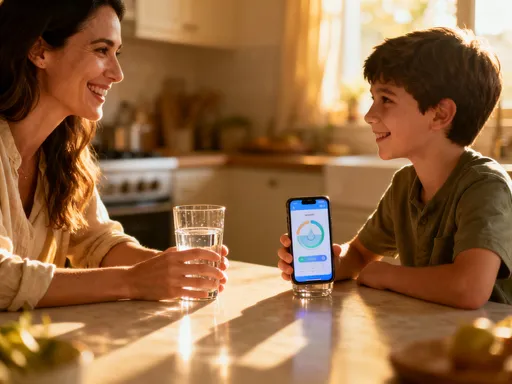
I’ll be honest — I wasn’t looking for another app. My phone was already a jungle of notifications, reminders, and to-dos. The last thing I wanted was another thing to manage. But I knew we needed a better way to stay in sync. I tried shared calendars, but they felt cold and robotic. I tried texting, but messages got buried under work emails and grocery store coupons. Then a friend mentioned something her family used — a shared digital board where everyone could leave notes, photos, voice messages, and reminders. No bells, no whistles, just a quiet corner online where we could meet without pressure. I was skeptical. Another tech solution? Really? But what sold me wasn’t the tech — it was the feeling. This wasn’t about efficiency. It was about warmth. We picked a simple, well-known app that’s widely used for family coordination — one that doesn’t demand attention but gently invites it. No complex setup, no learning curve. We just created a shared space, added everyone, and started small. My son left a photo of his dog chasing a squirrel. My daughter pinned a meme about homework. I added a voice note saying, “Leftovers in the fridge — your favorite!” And something shifted. For the first time in months, I felt like we were sharing a space — not just a house. The app didn’t replace talking. It made talking easier. Because now, when we did sit down together, we had something to talk about. “Oh, you saw the meme I posted?” “Yeah! I laughed so hard during my break!” These tiny exchanges built bridges. And the best part? It didn’t feel like work. It felt like coming home.
Small Messages, Big Impact: How Tiny Updates Rebuilt Connection
You’d be surprised how much a 15-second voice note can mean. “Hey, I’m running late — grab dinner without me.” “Look what I found at the farmers market!” “This flower reminded me of you.” These aren’t grand declarations. They’re whispers of care. But over time, those whispers became a steady hum of connection. We started using the board for everything — not just logistics, but feelings. My youngest began drawing little sketches and uploading them with captions like “Made this for you, Mom!” My partner started leaving audio notes with updates from his day — not just “meeting at 3,” but “Had a tough morning, but your note made me smile.” And I realized: we weren’t just sharing information. We were sharing our inner worlds. The app became our digital hearth — a place where we gathered, even when we weren’t in the same room. One night, I was folding laundry and heard a ping. It was my daughter: “Saw this sunset and thought you’d love it.” She’d snapped a photo from her window. I paused, looked outside, and saw the same sky glowing pink and gold. In that moment, I didn’t feel alone. I felt seen. These micro-moments didn’t take time — they gave it back. They created a rhythm of care that didn’t require scheduling or effort. And slowly, the emotional distance between us began to close. We weren’t just coexisting. We were co-feeling. The beauty of it was in the simplicity. No one had to perform. No one had to write a novel. A photo, a doodle, a short voice clip — that was enough. And because it was low-pressure, everyone participated. Even the quiet ones. Even the busy ones. Especially them.
Optimizing Space Without Renovating a Thing
Here’s something I never expected: cleaning up our digital space made our home feel physically lighter. Before, our kitchen counter was a battlefield of sticky notes, permission slips, grocery lists, and half-erased reminders. The fridge looked like a command center after a storm. And emotionally? It felt just as cluttered. Every time I walked in, my brain lit up with “Did I remember to…?” “Who’s picking up…?” “When is that thing due?” It wasn’t just visual noise — it was mental weight. Moving all of that to our shared digital board changed everything. Now, the grocery list lives online. The chore chart? Digital. Doctor’s appointments, school events, birthday reminders — all in one place, updated in real time. No more “I thought you were handling it” moments. No more double-booking. No more passive-aggressive sticky notes. And the kitchen? Now it’s just a kitchen. A place to cook, to chat, to breathe. The physical space didn’t change — but the emotional space did. There’s less tension. Fewer misunderstandings. More room to just be. I used to think organizing meant cleaning shelves or buying better bins. But what really opened up our home was clearing the mental clutter. When coordination happens quietly in the background, we’re free to focus on what matters — each other. I noticed it first in the evenings. Instead of arguing about who forgot to buy milk, we’d sit and talk. Instead of snapping about chores, we’d laugh at a funny photo someone posted. The digital shift didn’t just improve communication — it improved atmosphere. Our home feels calmer. Kinder. More like a home, and less like a logistics hub. And that, more than any renovation, made it feel like a place we all wanted to be.
Turning Routines Into Rituals: The Unexpected Emotional Shift
What started as a practical tool slowly became a habit — and then, something deeper. Checking the shared board became as automatic as brushing our teeth. My daughter does it before school. My partner glances at it during his lunch break. I check it while brewing my morning coffee. It’s not about missing out — it’s about belonging. And over time, those daily check-ins turned into something beautiful: anticipation. I started looking forward to seeing what someone had shared. A photo of my son’s science project. A voice note from my daughter singing a snippet of her new favorite song. A silly doodle from my partner. These weren’t tasks — they were gifts. And because they were consistent, they built trust. I knew someone was thinking of me. I knew I wasn’t carrying everything alone. That predictability — knowing someone would leave a note, a reminder, a smile — created a quiet sense of safety. In a world that often feels chaotic, that consistency was grounding. It reminded us we were a team. Even when we were apart. Even when we were stressed. The board became our anchor. And the more we used it, the more natural it felt. We didn’t have to force connection. It just… happened. One morning, I left a note saying, “Left your lunch by the door — love you!” Later, I got a reply: “Got it. Thanks, Mom. You’re the best.” Simple. Sweet. And it made my whole day. That’s the power of turning routine into ritual. It’s not about grand gestures. It’s about showing up, again and again, in small ways. And those small ways? They add up to something big — a family that feels connected, supported, and deeply seen.
Teaching, Not Enforcing: How the Youngest Members Embraced It Too
When we first introduced the board, I worried the kids would ignore it. Or worse — see it as another chore. “Now you have to check this too,” sounds like a punishment, right? So I didn’t enforce it. Instead, I invited them in. I showed my daughter how to upload a drawing. I let my son record a funny voice message about his soccer game. I made it playful. I left silly emojis, posted memes, and responded to their posts with enthusiasm. And slowly, they started participating — not because they had to, but because they wanted to. The key was letting them use it in their own way. My daughter loved posting photos of her art. My son preferred quick voice updates. One day, he recorded, “Mom, I left my jacket at school — can you remind me to get it tomorrow?” It was practical, yes — but it was also him reaching out. He trusted the space. He trusted that someone would listen. For quieter family members — the ones who don’t speak up at dinner or share their feelings easily — this tool became a voice. My daughter, who used to shut down when asked about her day, now shares little clips of her life online. “Here’s my new plant!” “This is my friend’s dog!” “I aced my math test!” No pressure. No interrogation. Just sharing, on her terms. And because it’s digital, it feels safer. Less intense than face-to-face. We never demanded participation. We celebrated it. A simple “Thanks for letting us know!” or “Love that photo!” went a long way. And over time, it became second nature. Now, if someone forgets to post, the others notice. “Did you see what Dad drew?” “Why didn’t you share your project?” It’s not nagging — it’s caring. It’s belonging. And that, more than anything, told me we’d built something real.
A Smarter Home Isn’t About Gadgets — It’s About Heart
Looking back, I realize the real upgrade wasn’t in the app — it was in us. We didn’t buy smart lights or voice assistants or fancy gadgets. We just learned how to pay attention. The technology didn’t change our lives. It helped us reclaim the things that matter most — presence, empathy, and the quiet joy of being known. Our home isn’t louder, but it’s fuller. Not with noise, but with care. We still have busy days. We still forget things. But now, when we do, it’s not a crisis — it’s a chance to connect. “Oops, I forgot to buy eggs — can you grab some?” “No problem — I’ll add it to the list!” And sometimes, that’s enough. Because behind the reminder is a relationship. Behind the voice note is a person who cares. This simple tool didn’t fix everything — but it helped us remember what we already had. It reminded us that connection doesn’t have to be perfect. It just has to be consistent. It doesn’t have to be loud. It just has to be real. And sometimes, the smallest things — a photo, a doodle, a three-second voice clip — can say the most. So if you’re feeling that quiet distance in your home, I get it. You’re not failing. You’re just busy. And maybe, just maybe, what you need isn’t more time — it’s a better way to use the time you already have. Something simple. Something warm. Something that helps you feel like a family, not just roommates. Because a home isn’t measured in square feet. It’s measured in moments. In messages. In the little things that say, “I see you. I’m here. I love you.” And sometimes, all it takes is one shared space to start hearing each other again.