From Lonely Nights to Connected Mornings: How Sleep Tech Brought Us Closer
You know that feeling—tossing and turning while your partner sleeps soundly, or waking up exhausted even after eight hours in bed? I used to think poor sleep was just something we had to live with—until I discovered how sleep monitoring tools quietly transformed not just my rest, but my relationships. It wasn’t about chasing perfect data; it was about finally understanding each other’s rhythms and finding simple ways to feel more in sync. What started as a personal experiment became a shared journey, one that brought us closer in ways I never expected. Because sleep, it turns out, isn’t just about closing your eyes. It’s about how we show up for each other when we open them.
The Silent Struggle Behind Closed Bedroom Doors
Have you ever woken up feeling like you didn’t sleep at all—even though you were in bed for hours? Or maybe you’ve noticed your partner tossing and turning beside you, while you’re wide awake, counting the minutes until the alarm? We’ve all been there. But what we don’t always talk about is how those restless nights don’t just drain our energy—they quietly chip away at our connections. I remember one morning, after a particularly bad night, snapping at my husband over something small. He looked at me, hurt, and said, “You’ve been so short with me lately.” That moment hit me hard. It wasn’t that I didn’t care. I was just exhausted. And I realized I wasn’t the only one. My teenage daughter was dragging through school, my mom was forgetting things more often, and my best friend confessed she’d been feeling isolated, even in her own home. The common thread? Poor sleep. But here’s the thing—sleep isn’t just a personal issue. It’s a family one. When one of us is tired, it ripples through the whole household. And yet, we rarely talk about it. We treat it like a private struggle, something to power through. But what if we didn’t have to? What if, instead of guessing why someone’s irritable or distant, we could actually understand what was happening while they slept?
That’s where I started to rethink everything. I wasn’t looking for a high-tech fix. I just wanted to feel better, and to stop unintentionally hurting the people I love. I began reading about how sleep affects mood, memory, and emotional regulation. Studies show that even one night of poor sleep can make us more reactive, less patient, and less able to empathize. And over time, that adds up. But knowledge alone wasn’t enough. I needed a way to see what was really happening. That’s when I first heard about sleep monitoring devices—not the bulky ones from a sleep lab, but small, unobtrusive tools that could sit near the bed and quietly track what goes on at night. I was skeptical at first. Was this just another gadget promising more than it could deliver? But I decided to try it, not for the data, but for the chance to finally understand.
When Restless Nights Strain Relationships
Let’s be honest—none of us are at our best when we’re tired. And yet, we expect ourselves and our loved ones to function normally, even when we’re running on empty. I remember a weekend morning when my daughter was trying to show me a drawing she’d made. I was half-awake, still groggy from a night of interrupted sleep, and I barely looked up from my coffee. Later, she told her dad, “Mom didn’t even care.” My heart broke. I did care—so much. But exhaustion had turned me into someone I didn’t recognize. That’s the hidden cost of poor sleep: it doesn’t just make us tired. It makes us less present, less patient, less kind. And when that happens over and over, it starts to erode the little moments that build connection.
Couples feel this too. How many arguments start not because of a real issue, but because someone didn’t sleep well? “You left the light on.” “You’re breathing too loud.” “Why are you up so early?” These aren’t real conflicts—they’re sleep-deprived reactions. And because we don’t see the root cause, we blame each other instead of the real culprit: fatigue. Parents know this especially well. A baby wakes up crying, the mom gets up, the dad rolls over—next thing you know, there’s tension in the air, even if no one says a word. Over time, these unspoken frustrations build up. One partner feels unsupported, the other feels unappreciated. But what if we could see that it wasn’t about effort or love—it was about sleep? What if we could look at a simple chart and say, “No wonder you’re tired today. You only got 45 minutes of deep sleep”? That kind of insight changes the conversation. It shifts us from blame to understanding. And that shift? It’s everything.
Meet the Little Device That Listens While You Sleep
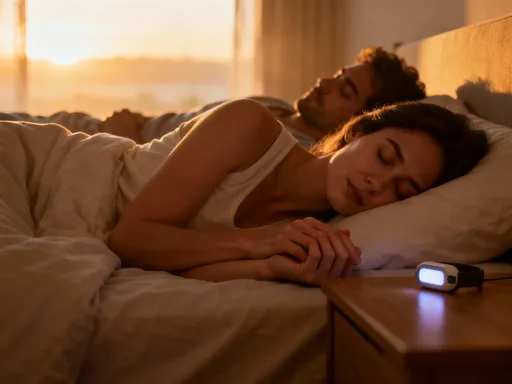
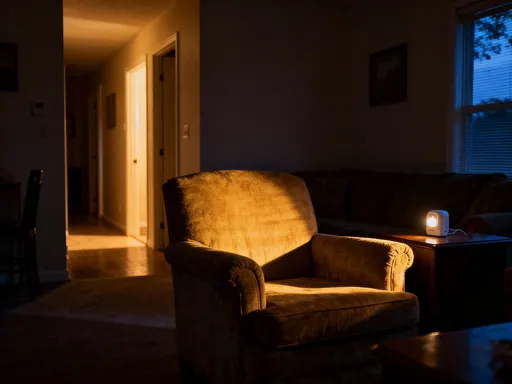
So, what exactly is a sleep monitor? Think of it as a quiet observer—something that sits on your nightstand or under your mattress and listens to your body while you rest. It doesn’t wake you up. It doesn’t beep or buzz. It just watches. Using harmless sensors, it tracks things like your breathing patterns, how much you move, and when you’re in light, deep, or REM sleep. Some even pick up on snoring or changes in heart rate. But here’s the important part: it doesn’t judge. It doesn’t tell you you’re doing it wrong. It just shows you what’s happening. And that’s powerful.
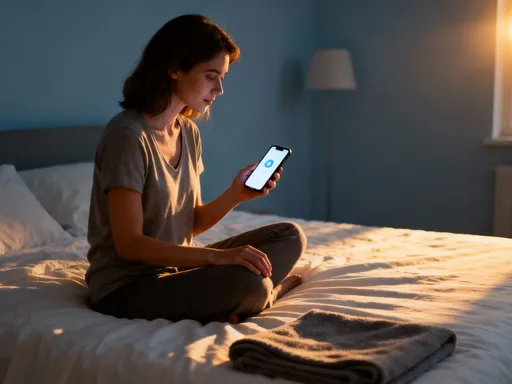
I started with a simple under-mattress pad. It looked like nothing—just a thin layer I slipped under the fitted sheet. No wires, no setup drama. That first night, I forgot it was even there. But the next morning, I opened the app on my phone and saw a colorful graph of my sleep. There were peaks and valleys, color-coded zones—light blue for light sleep, dark blue for deep, purple for REM. And right there, in the middle of the night, was a big spike: I’d woken up at 2:17 a.m. and stayed awake for over an hour. I didn’t even remember that. But there it was, proof. And when I showed it to my husband, he said, “That’s exactly when I heard you moving.” Suddenly, my experience wasn’t just in my head. It was real. It was shared. We weren’t guessing anymore. We were seeing.
What surprised me most was how gentle the whole thing felt. This wasn’t about chasing perfect scores or hitting sleep goals like some kind of fitness challenge. It was about awareness. And the device? It wasn’t cold or clinical. It felt more like a thoughtful friend who noticed things you didn’t. “Hey, you moved a lot between 1 and 3 a.m.” “Your breathing was steady after 4.” Nothing dramatic. Just quiet, consistent feedback. And over time, that feedback started to change how we thought about sleep—not as something we either had or didn’t, but as something we could understand and improve, together.
From Data to Empathy: Seeing Sleep Through Someone Else’s Eyes
Here’s the moment everything changed. My husband had been teasing me for years about being a “light sleeper.” “You wake up if a leaf falls outside,” he’d say. But after we set up his monitor, I saw his sleep graph—and he was waking up just as often as I was. The difference? He didn’t remember it. His body was restless, but his mind didn’t register it. When I showed him the data, he was stunned. “I had no idea,” he said. And in that moment, something shifted. The jokes stopped. The frustration faded. Instead, he said, “No wonder you’re tired. You’re not imagining it.” That simple sentence—spoken with real understanding—meant more than any apology.
That’s the magic of sleep tech: it turns invisible struggles into visible insights. When you can see your partner’s sleep pattern, you stop assuming. You stop thinking, “Why can’t they just relax?” and start thinking, “Wow, their body is working so hard to rest.” I remember showing my daughter her sleep chart. She’d been having trouble focusing in school, and I’d been pushing her to “try harder.” But her data showed she was only getting 5 hours of real sleep a night. She wasn’t lazy—she was exhausted. When I showed her the graph, she teared up. “I’m not failing,” she said. “I’m just tired.” And just like that, our whole dynamic changed. I stopped nagging and started supporting. We adjusted her bedtime, limited screen time before bed, and created a quiet wind-down routine. It wasn’t perfect, but it was progress. And more than that—it was connection.
Small Changes, Big Results: Tuning Your Home for Better Sleep
Once we had the data, we didn’t try to overhaul everything at once. We started small. One of the first things we noticed was that our bedroom was too warm. The monitor showed both of us waking up around 3 a.m., and the room temperature reading confirmed it—over 75 degrees. So we adjusted the thermostat, added a fan, and kept the door open for airflow. Within two nights, our deep sleep increased by 20%. Another change? We started dimming the lights an hour before bed. No screens, no bright lamps—just soft lighting and quiet time. It felt strange at first, like we were moving in slow motion. But soon, it became our favorite part of the day. We’d read, talk, or just sit together in the calm. And guess what? We started falling asleep faster.
We also discovered that our bedtime routines were out of sync. I was going to bed at 10, but my husband was up until midnight. The monitor showed that every time he got into bed, I’d wake up. So we made a pact: lights out by 10:30, together. It meant he had to finish his evening tasks earlier, and I had to stop waiting for him. But it was worth it. We started falling asleep side by side, and our sleep quality improved for both of us. Even our dog adjusted—he stopped pacing at night and started settling down with us. These weren’t huge changes. But together, they added up. And the best part? We were doing them as a team. It wasn’t about fixing one person. It was about creating a home that supported rest for everyone.
Bedtime Is No Longer a Solo Act
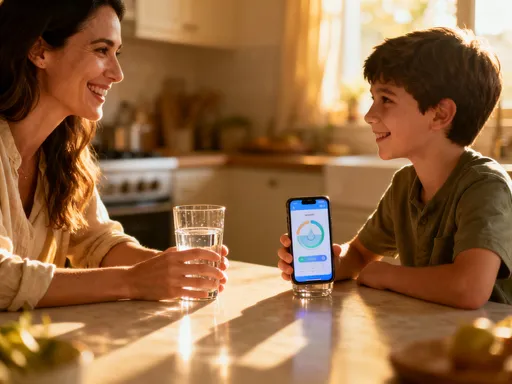
For years, sleep felt like a private, almost selfish act. “I need my rest,” we’d say, as if it were something we had to claim for ourselves. But with the monitor, it became a shared experience. We started talking about sleep like we talk about meals or schedules. “How’d you sleep last night?” turned from a casual question into a real check-in. We’d compare notes, celebrate good nights, and brainstorm solutions for bad ones. “You were up a lot after midnight—were you stressed?” “I saw your deep sleep was great—what did you do differently?” It became a way to care for each other.
Even our extended family got involved. My mom started using a simple wearable sleep tracker, and now we chat about her sleep patterns when I call. “I’m finally getting more REM sleep,” she said proudly last week. And when my sister visited, she asked if she could try the monitor too. “I’ve been so tired lately,” she said. We set it up for her, and the next morning, we all gathered around the app, laughing at how much she tossed and turned. But it wasn’t mocking—it was loving. We were seeing her struggle, and we wanted to help. Sleep had become something we shared, not something we endured alone.
Beyond the Bedroom: How Better Sleep Fuels Daily Connection
The changes didn’t stop at bedtime. As our sleep improved, so did our days. I noticed I had more patience with my daughter. I wasn’t zoning out during her stories. I was really listening. My husband said he felt calmer at work, less reactive in meetings. Even our conversations at dinner became richer. Instead of just going through the motions, we were present. We laughed more. We argued less. And when stress did come up, we handled it better—because we weren’t already running on empty.
One Saturday morning, my daughter woke up early and came into our room. Instead of groaning or telling her to go back to sleep, I smiled and pulled her into bed. We lay there, talking about her dreams, her school, her worries. It was a moment of pure connection—one that wouldn’t have happened if I’d been exhausted. And that’s when it hit me: better sleep didn’t just give me more energy. It gave me more presence. It gave me more love to give. Because when we’re well-rested, we’re not just healthier. We’re kinder, more attentive, more ourselves. And that ripples out into every relationship we have.
Technology That Doesn’t Distract—It Deepens
We spend so much time worrying about how technology pulls us apart—phones at the dinner table, screens before bed, endless scrolling instead of talking. And it’s true, some tech does that. But sleep monitors are different. They don’t demand our attention. They don’t buzz with notifications. They don’t pull us away from each other. Instead, they help us come closer. They give us a shared language for something we all experience but rarely discuss. They turn invisible struggles into moments of understanding. And in a world that often feels too fast, too loud, too disconnected, that’s a quiet revolution.
What I love most is that this technology doesn’t make us more robotic or data-obsessed. It makes us more human. It reminds us that we’re not meant to go through life alone, even in something as personal as sleep. We’re wired for connection. And sometimes, all it takes is a little device—one that listens, learns, and helps us see each other more clearly—to rediscover that truth.
Waking Up to Each Other
That opening scene—the one where I’m tossing and turning while my partner sleeps soundly—still happens sometimes. But now, it ends differently. Instead of silence or frustration, we talk. “You were up at 2 again,” he’ll say, looking at the app. “Want me to make you tea?” Or I’ll notice his sleep was restless and say, “You okay? Want to talk about what’s on your mind?” The data doesn’t fix everything. But it opens the door. It gives us a reason to care, a way to understand, a starting point for connection.
Better sleep isn’t just about feeling rested. It’s about feeling connected. It’s about waking up not just to the day, but to each other. And sometimes, all it takes is a little device that helps us see what’s been there all along—the quiet, beautiful rhythm of us, learning to rest, and live, together.